Merchants and Heroes at the Ends of the Known World
Barcelona, 28 February-6 March 2027: Seminar in Ancient Greek
..On a golden vessel / toward the depths of the sacred night…
(Stesichorus, fr. 8, 2-3)
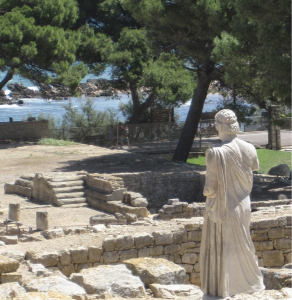
For the Greeks, the far West of the Mediterranean was a place of mystery: full of monsters, fabulous riches, and memories of ancient heroic deeds. There lay the Garden of the Hesperides, with its golden apples guarded by a dragon, and Atlas holding up the heavens. There, between the island of Erytheia and Tartessos, lay the kingdom of Geryon, who had three heads—or three bodies—and owned heifers that Heracles stole on the orders of Eurystheus. Further north stood a mountain range that, because of a fire started by some shepherds, burned for so long that the forests were reduced to ashes, and rivers of the purest silver gushed forth from the earth: it is said that the mountains took the name Pyrenees from this event. The peoples of the inlands believed that white deer possessed prophetic powers. From a late-antique account, we learn that when Dionysus set out from Africa to subdue India, he also crossed Iberia, where he left one of his lieutenants: Pan, from whom the name “Spania” derives. History also tells us that this region was a popular destination for Phoenician merchants, who were drawn to its mineral wealth; and for the Greeks, who established colonies there as early as the 6th century: Emporion (now Empuries) and Rhode (Roses) were among the most significant, and it was there that their culture intermingled with that of the local Iberians and that of the Phoenician and Etruscan merchants.
From 28 February to 6 March 2027, in Barcelona, Schola Humanistica is organising a seminar on Ancient Greek dedicated to the Greek presence on the Iberian Peninsula and the myths of the far west. We shall read the accounts by Hesiod and Apollonius of Rhodes concerning the Garden of the Hesperides; we shall witness the battle between Geryon and Heracles through the luminous verses of Stesichorus and the commentaries of the mythographers; we shall listen to Herodotus’s accounts of the boundaries of the known world, and to those of Diodorus Siculus on the Pyrenees and the inhabitants of the Balearic Islands, invincible philanderers and slingers. Lessons will take place every morning from 9.30 am to 1.00 pm and will include, in addition to reading and discussing texts in the language, writing exercises and conversations aimed at refining students’ active and passive knowledge of Ancient Greek. On the afternoon of 2 March, we will visit the Archaeological Museum of Barcelona, which houses a wealth of Phoenician, Greek and Iberian artefacts. 4 March will be devoted entirely to a visit to Empuries, the first and most important Greek colony on the Iberian Peninsula. Our guides on these excursions will be the writings of Strabo and Pseudo-Plutarch. All the lessons and visits as part of Ἑσπέριοι μῦθοι will be conducted entirely in Ancient Greek, so that the journey of discovery into the Greek heritage of the West is also an experience of total immersion in the Ancient Greek language.
Last day to Register: 20 January, 2027
SCHEDULE PROGRAM
| Programma | |
| 28 February | Arrival of participants.
8:30 p.m. Welcome dinner in the historic district |
| 1 March | 9.30–10.00 Opening of the seminar
10.00–11.00 Lecture: ‘The land where day meets night’. 11.30–13.00 Lecture: ‘Hercules in the West’. |
| 2 March | 9.30–11.00: Lecture: ‘The Kingdom of Geryon’
11.30–13.00: Lecture: ‘The Fire in the Pyrenees’ 16.00–18.00: Visit to the Archaeological Museum of Barcelona |
| 3 March | 9.30–11.00: Lecture: ‘The Iberians’
11.30–13.00: Lecture: ‘The Islands of the Naked’ |
| 4 March | 9.30 am: departure for Empuries
11.00 am–1.00 pm: visit to the archaeological site of Empuries 1.00 pm–2.30 pm: lunch 2.30 pm–4.30 pm: visit to the Empuries museum |
| 5 March | 9.30–11.00: Lecture: ‘The Riches of Spain’.
11.30–13.00: Lecture: ‘Sertorius and the White Doe’. |
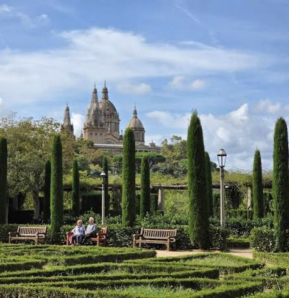
| 6 March | 11:00–13:00 Walking tour in Montjuïc, with sea views.
13:00 Closing lunch in Montjuïc (at La Greca) |