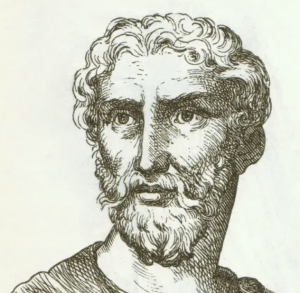
Φιλοκτήτης

The Solitude of Lemnos

Ancient Greek online course, 30 September- 28 October, 2026

For inscrutable reasons, the gods tend to persecute valiant men, whilst bestowing prosperity upon the petty and the wicked: this is the central theme of Philoctetes, the play with which Sophocles won the Great Dionysia in 409 BC. The tragedy opens on the coast of Lemnos, a landscape of rugged rocks. In the background stands a cave with two entrances, through which ‘the breeze blows in summer, bringing sweet sleep’, and beside it ‘the gushing of a spring’ can be heard. This is the place where Philoctetes, king of Malis, was banished by the Achaeans following a snake bite which, having festered into an incurable and foul-smelling wound, caused him to let out screams unbearable to anyone near him. At the beginning of the tragedy, Odysseus and Neoptolemus appear on stage: from their dialogue we learn that they have arrived on the island with the intention of deceiving Philoctetes and persuading him to hand over his bow, which, according to a certain prophecy, is necessary for the conquest of Troy. Thus Neoptolemus enters the cave and meets its inhabitant, a man brutalised by ten years of solitude, yet one who retains the pride and nobility of spirit he possessed when he set out for Troy. To win his favour, the young man must carry out the lies and stratagems prescribed to him by Odysseus, all with underlying reluctance and a growing sense of remorse. 

In this course, which will take place over one weekly session from 30 September to 20 October, we will read the most significant passages from Sophocles’ *Philoctetes* and analyse them entirely in Ancient Greek. At the start of the course, we shall focus on reconstructing the background to the story, which has been handed down to us in fragmentary form from a variety of sources: the *Iliad*, the *Odyssey* and other poems of the Trojan cycle, Plutarch and Apollodorus. We shall be guided on this journey by Dion of Prusa, who, in a speech, recounts having read, in a single morning, the *Philoctetes* by Aeschylus, Sophocles and Euripides, providing a vivid and detailed summary of each version.
The first four sessions will take the form of webinars, whilst in the final one – which will be held via Zoom – students who wish to do so will be invited to take part in an oral and written exercise on the use of the vocabulary and grammatical structures studied throughout the course.
From this collection of readings, the originality of Sophocles’s invention will emerge, centring on the barren, sun-scorched island of Lemnos, over which only a few rare birds fly, and where Philoctetes’s cries are lost amid the bleakness and endless desolation.

    Last Day to Register: 29 September, 2026


    Schedule Topic
    I. Wednesday 30 September, 18:00-19:15 CEST, zoom webinar Arrival to Lemnos
    II. Wednesday 7 October, 18:00-19:15 CEST, zoom webinar In the Cave of Philoctetes
    III. Wednesday 13 October, 18:00-19:15 CEST zoom webinar I praise the Gods, yet I see their wickedness
    IV. Wednesday 21 October, 18:00-19:15 CEST  zoom webinar Deception
    V. Wednesday 28 October, 18:00-19:15 CEST, zoom meeting Teophany

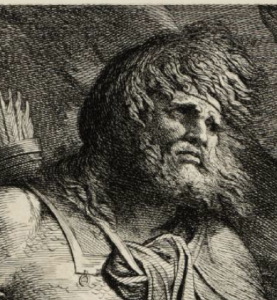
    Philoctetes

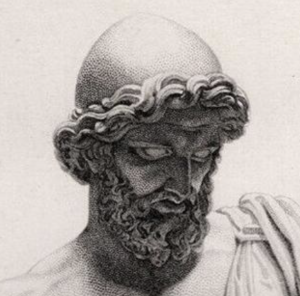
    Ulysses

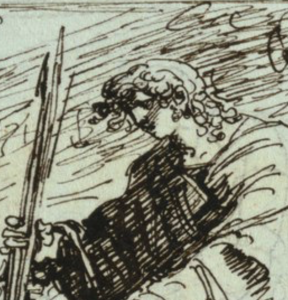
    Neotolemus

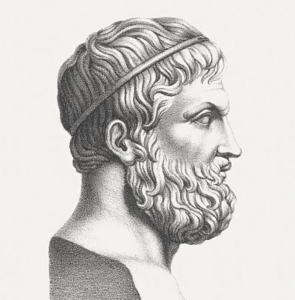
    Sophocles

    Dion of Prusa


    Instructor

    Paolo Pezzuolo


    Intended course audience

    Teachers, students and scholars of the ancient world.

    Where

    Online, using Zoom as a platform.

    Language

    Ancient Greek

    Level

    Intermediate or advanced

    Professional development credit

    At the end of the course, a certificate of participation will be issued on request.

    Registration fee

    65 €

    Course registration and Availability to Recorded Sessions

    Upon successfully registering for the course, you will be entered on the list of course participants and you will be emailed the sign in information needed to join the session meetings. At the end of each session, a recording will be made available for the entirety of the course.